
CrossExamined Blog
Tackling today’s toughest questions, these posts explore topics on God, morality, science, and culture.
Whether you’re a skeptic or believer, each article challenges your worldview and sharpens your thinking. Engaging, thought-provoking, and unapologetic, this is a place to dig deeper and follow the truth wherever it leads.




A Divine Love Theodicy: Addressing James Sterba’s and Erik Wielenberg’s Problem of Evil Arguments
2. Does God Exist?Abstract: James Sterba claims my Divine Love Theodicy does not address the working parts of his new logical problem of evil. In this paper I summarize Sterba’s new logical problem of evil, respond to it with an explanation of my Divine Love Theodicy, and point out how my theodicy does address the working parts of his […]
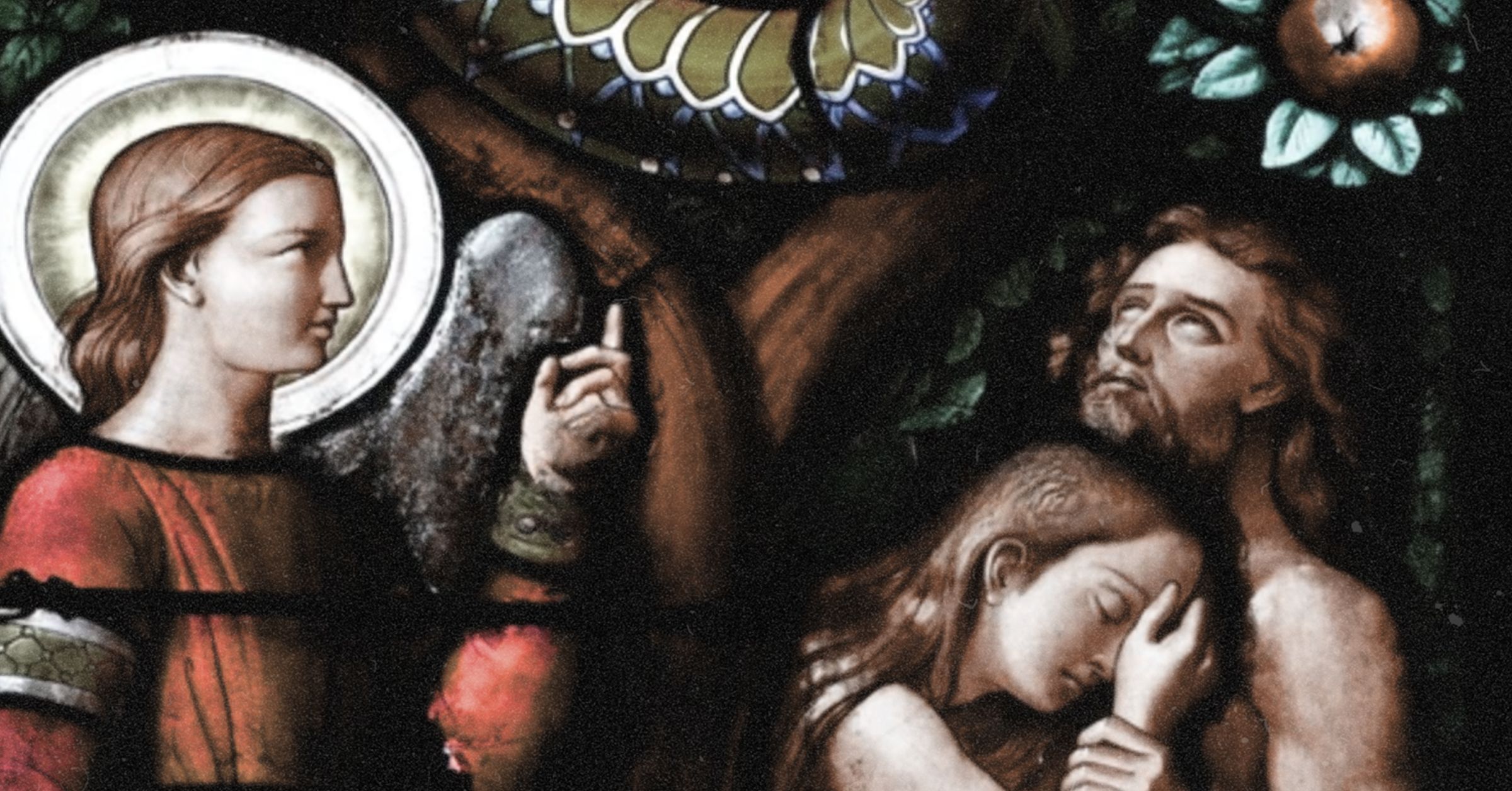
Why did God Create the Tree in the First Place?
Theology and Christian ApologeticsA few weeks ago, our church’s 3rd-5th graders were learning about the creation story from Genesis, and I was brought in to the planning process to help address common science misconceptions that the kids will encounter as they get older. (i.e. “Science can disprove God,” “Natural processes alone can produce design,” or “Science uses facts, religion […]
If I Were a Mormon: A More Coherent View of God
2. Does God Exist?, Theology and Christian ApologeticsOver the past several years—especially since 2018—I’ve made multiple trips to Utah every year. I’ve honestly lost count of how many times I’ve been out there, but it’s starting to feel like a second home. I can understand why Brigham Young reportedly said, “This is the place.” It’s beautiful. One of the things I appreciate […]
Why Is ASU’s New College Requiring Confessional Rituals?
Legislating Morality, Culture & PoliticsAt Arizona State University’s New College (where I serve as a tenured full professor of philosophy and religion) the faculty recently voted to make a Native American Land Acknowledgment the official college policy. Until now, these statements were read at the beginning of faculty meetings. At times, faculty were even asked to bow their heads […]
Dialogue and Christian Apologetics: A Biblical-Theological Overview
Theology and Christian ApologeticsChristian apologetics is often understood as the task of defending the faith—giving reasons why believing in Christ is rational, true, and worthy of commitment. Scripture itself urges believers to be “ready to give an answer” for the hope that is in them (1 Pet. 3:15). Yet the Bible presents this defense not merely as the […]
Some Definitional Drawbacks In Atheism
2. Does God Exist?In a previous article I wrote about how “atheism” is best understood as a belief that there is no God. Those who prefer to describe themselves as merely “lacking God-belief” would do better to describe themselves as “negative atheists” as that is the more precise term. As a postlude to that article, I think it’s important to […]
Which God When There are 3,000 to Choose From?
2. Does God Exist?When I went to university, I encountered the biggest intellectual doubt I’ve ever faced as a Christian: How can I be sure that Christianity is true? Here was my thinking: “Can I really claim that I have the right religion when there are 3,000 others to choose from?” You might have come across a form […]
Jonah and the Big Fish, Part 2
3. Are Miracles Possible?In my previous article, Jonah and the Big Fish Part 1, I spoke about Jonah, the wayward prophet who initially tried to avoid God’s command to warn the people of Nineveh about the impending judgment they were about to receive for the wickedness of their culture. In that article, I discussed the identity of Jonah, who […]
Jonah and the Big Fish (Part 1)
3. Are Miracles Possible?The Book of Jonah is very short, only four chapters long. It tells of a prophet named Jonah who was told by God to go to the great city of Nineveh and warn them of a coming judgment. Jonah goes the opposite way on a ship, but a violent storm ends with Jonah being tossed […]
Advice to Young Aspiring Apologists
Theology and Christian ApologeticsDavid Wood recently posted an excellent video featuring a series of short interview clips with various apologists (Douglas Groothuis, Gary Habermas, Craig Hazen, Mike Licona, Nabeel Qureshi, Mary Jo Sharp, and Frank Turek) on advice to future apologists. As one who is of the younger generation myself (I am almost 27)[1], and who has been active in […]
Defining Atheism: Belief in No God or No Belief in God
2. Does God Exist?Is Atheism the absence of God-belief or the present belief that there is no God? Traditionally, “atheism” refers to the belief that there is no God. But in the last 20-30 years, it’s become popular to treat the term as a kind of agnosticism, “having no belief in God” or simply, “lacking God-belief.” Who’s right? And what […]
Jesus as Clark Kent
3. Are Miracles Possible?, Theology and Christian ApologeticsMy inner geek is going to show for just a second here. I love superhero origin stories. My favorite part of the story is watching them learn who they truly are, struggle with their powers, and choose the responsibility of sacrificial heroism. Can you imagine Jesus as Clark Kent? Jesus is the ultimate hero, but […]
5 Biblical Men Every Boy Should Know
4. Is the NT True?A Twitter post caught my eye a while back from a brother in Christ who was fed up with his church’s take on biblical manhood. Manhood, it was implied, was a burly trinity of plaid, football, and Clint Eastwood. As if the lost 11th commandment was: Thine beard shall be like Jesus, and thou shalt give John […]
Arguing from the Extremes
1. Does Truth Exist?There is a very common type of fallacious reasoning that I have termed arguing from the extremes. Once you see this, you’ll notice that it’s everywhere in our society and especially political discourse. Roughly speaking it’s the idea that one or an extremely small number of counter examples disproves a whole theory. This is simply […]
What is Truth?
1. Does Truth Exist?Most people expect others to tell the truth, and we can witness this expectation in many spheres. In law, truth is taken so seriously that people must be sworn in by raising their right hand and making an oath to tell the truth. In football, referees are accountable for making calls based on the truth. […]
The Argument from Martyrdom: A Response to Rabbi Tovia Singer
4. Is the NT True?Rabbi Tovia Singer is an orthodox Jewish rabbi and the founder and director of Outreach Judaism. He is widely known for his counter-missionary polemics and his criticism of the New Testament presentation of Jesus as the Hebrew Messiah (see his two volume set, Let’s Get Biblical: Why doesn’t Judaism accept the Christian Messiah?.[1] In a video published this week, […]
How is Jesus God if He Doesn’t Know All that the Father Knows?
4. Is the NT True?, Theology and Christian ApologeticsA Jehovah’s Witness said this to me in a discussion: “If the Son doesn’t know what God knows, then the Son is not almighty God. Imposing ‘limitations’ on Jesus because of His humanity while insisting He was ‘fully God’ in ‘nature’ is a natural conflict. There is no scriptural support for this assumption that I […]
Did Jesus Rise from the Dead?
3. Are Miracles Possible?, 4. Is the NT True?When it comes to the fate of Jesus and determining if he rose from the dead, a historian employs a two-step or stage process to uncover the relevant historical facts surrounding the fate of Jesus and then sifts through the various live explanations to determine the best explanation. It is somewhat like being a detective. […]
Faith in Action
Theology and Christian ApologeticsEach and every sermon we listen to, every teacher we hear, every Bible verse we read, and even the article you’re reading right now has only so much effect. We can listen and agree with what is being said. We can agree that the words we read hold truth. But then what? Do we give […]
The Ultimate Kalam Cosmological Argument Resource List: 80+ Curated Picks from Top Philosophers and Apologists, Part 2
2. Does God Exist?[Editor’s Note: this blog series was originally posted as a single blog. The section “Introduction to the Kalam” is repeated here in both entries, for context, for the reader.] Introduction to the Kalam The Kalam Cosmological Argument (KCA) is one of the most widely discussed arguments for the existence of God in contemporary philosophy and apologetics. […]
The Ultimate Kalam Cosmological Argument Resource List: 80+ Curated Picks from Top Philosophers and Apologists, Part 1
2. Does God Exist?Introduction to the Kalam The Kalam Cosmological Argument (KCA) is one of the most widely discussed arguments for the existence of God in contemporary philosophy and apologetics. It goes like this: Whatever begins to exist has a cause. The universe began to exist. Therefore, the universe has a cause. Though it sounds simple, the implications […]